


Wilbert van Panhuis: FAIR for Public Health
Wilbert van Panhuis contributed vastly to data science for public health throughout his career. He established Project Tycho, an open-access data repository that applies FAIR (findable, accessible, interoperable and reusable) guidelines to global health data, directed the inaugural Coordination Center for the Models of Infectious Disease Agent Study (MIDAS) for many years and directed projects applying FAIR standards to data for the National Institute of Allergy and Infectious Diseases (NIAID).
In 2004, he earned an M.D. from Vrije Universiteit in Amsterdam, and in 2009 he completed his Ph.D. for Global Disease Epidemiology and Control at Johns Hopkins Bloomberg School of Public Health and joined the University of Pittsburgh School of Public Health. At the University of Pittsburgh, Donald Burke, a significant source of inspiration in Panhuis’s life, encouraged him to focus on the data aspect of public health. Soon after, in 2013, Panhuis started Project Tycho with the goal of harmonizing and standardizing over 125 years of high quality public health data for many health conditions across the world. Furthermore, Project Tycho comprised data for 3.6 million infectious disease cases and deaths in the United States over 100 years.
Panhuis’s research through Project Tycho revealed that childhood vaccination in the United States, from 1888 to 2013, was able to prevent 100 million cases of serious childhood contagious diseases. Then, in 2015, Panhuis and his team published research on the infectious, mosquito-borne disease dengue in Southeast Asia. Specifically, they analyzed 18 years worth of monthly surveillance report data for dengue in Southeast Asia and discovered that elevated temperatures may increase dengue outbreaks in all of the studied countries.
In 2014, Panhuis and his team published a literature review titled A systematic review of barriers to data sharing in public health. The paper examined technical, motivational, economic, political, legal and ethical barriers. It also highlighted the lack of a global framework or guidelines for public health data sharing, demonstrating Panhuis’s commitment to standardized, accessible data.
As FAIR guidelines (introduced in 2016) grew in prominence, they became a central part of Panhuis’s work. Panhuis received funding from the National Institutes of Health (NIH) Big Data to Knowledge (BD2K) to improve global health data representation by increasing compliance with FAIR standards. This led Panhuis to release Project Tycho 2.0 in 2019, which comprises 5.7 million counts of infectious diseases in the United States and of dengue-related conditions in 98 additional countries.
Panhuis began to direct MIDAS in 2019, right as COVID-19 took the global stage. MIDAS doubled in members from 2019 to 2020 as they worked to increase usability of the data and collaborate with infectious disease modeling researchers, allowing them to present clear results that help guide public health policies.
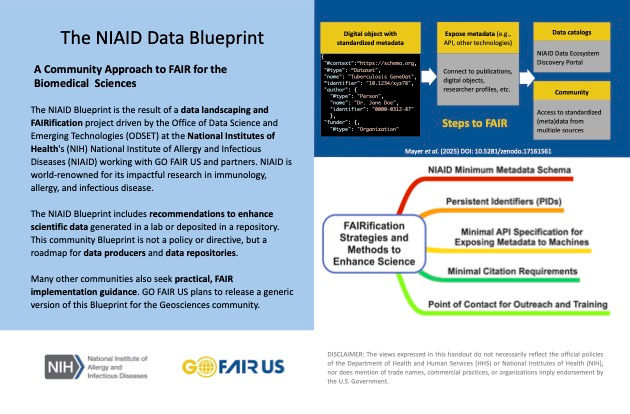
In 2021, Panhuis left the University of Pittsburgh and MIDAS to direct the Office of Data Science and Emerging Technologies (ODSET) at NIAID. There, he worked on projects like the NIAID Data Ecosystem Discovery Portal, which “enables researchers to identify and access data sets using user-friendly filters or advanced queries, without requiring technical expertise” (Tsueng et al., 2026). He also played a crucial role in instigating the ongoing NIAID Data Landscaping Project, which aims to make public health metadata more efficient, allowing scientists to quickly access the existing data from across the NIAID data ecosystem, which in turn accelerates future research.
“Wilbert understood before most people did that reproducibility is a public health issue, not a technical one, and that data stewardship is a scientific responsibility rather than administrative overhead. He made that case to me when I was his doctoral student working on infectious disease computational modeling, and he brought the same conviction to NIAID, where we advocated together for open and interoperable data,”said Dasha Pokutnaya, PhD, MPH, who trained under Panhuis as a doctoral student at the University of Pittsburgh and later worked with him at NIAID’s Office of Data Science and Emerging Technologies. “He argued for FAIR data with wit and humor, in rooms full of people who had never once thought about metadata, and he made them care by the end.”
The work of those like Wilbert’s dedication to structuring public health data to be reproducible and efficiently accessible worldwide is priceless. His work opened doors to boundless progress and opportunity and his legacy in data science and public health will continue to echo in all future endeavors within these fields and beyond.
Funding Acknowledgement
We gratefully acknowledge the Office of Data Science and Emerging Technologies (ODSET) at the National Institute of Allergy and Infectious Diseases (NIAID).This project has been funded in whole or in part with Federal funds from the NIAID, National Institutes of Health, under Contract No. 75N91019D00024, Task Order No. 75N91020F0022. Any opinions, findings, and conclusions or recommendations expressed in this material are those of the author(s) and do not necessarily reflect the views of the Frederick National Laboratory for Cancer Research, Leidos Biomedical Research, Inc., or NIAID. Any opinions, findings, and conclusions or recommendations expressed in this material are those of the author(s).


Comments